
Move from complex PrestaShop management to a simpler, scalable Shopify store
We know PrestaShop from the inside. We map your modules, combinations and languages to Shopify and keep your data and rankings intact.
- Shopify Select Partner
- 80+ engineers since 2010
- 4.9 from 28 Shopify Partner Directory reviews

Why businesses move from PrestaShop to Shopify
As commerce operations grow, businesses often need a platform that is easier to manage, scale, and optimize.
Complex module & maintenance management
As PrestaShop stores evolve, module-heavy setups can become increasingly difficult to maintain reliably. Customizations, third-party extensions, and version dependencies often introduce compatibility and upgrade challenges over time. Many businesses eventually face growing maintenance effort just to keep the store operating smoothly.
Performance & stability challenges
Older storefront architecture and heavily customized themes can impact loading speed and overall site stability. As catalogs and traffic volumes increase, performance optimization may require more technical intervention and infrastructure management. Slow or inconsistent storefront experiences can affect both customer engagement and operational efficiency.
Scaling limitations
Scaling into larger catalogs, multi-store operations, or international commerce workflows can become more complex over time. Businesses often encounter limitations around integrations, operational flexibility, and system coordination as requirements grow. What works for an early-stage store may become harder to manage at scale.
Higher operational complexity
Day-to-day store management can become increasingly dependent on technical oversight and manual coordination. Teams may rely on multiple tools, workarounds, and fragmented processes to manage inventory, orders, and integrations effectively. This can slow execution and reduce operational visibility across the business.
Limited modern commerce flexibility
Modern commerce increasingly depends on connected systems, automation, AI-driven experiences, and flexible integrations. Older platform structures can make it harder to adapt quickly to evolving customer expectations and operational requirements. Businesses often look for platforms that support more streamlined commerce innovation.
Conversion & UX constraints
Outdated storefront patterns and fragmented checkout experiences can create friction throughout the customer journey. Navigation, mobile usability, and merchandising flexibility may become harder to optimize within older implementations. Improving conversion efficiency often requires a more modern and flexible commerce foundation.
What the migration includes
Product, customer and order migration
Products, categories, customers, addresses, orders and reviews move through Dofeeds, our own migration engine. Combinations become variants, with attribute groups as options, and product features become metafields. Customers reactivate their accounts through an activation email.
Theme recreation or store redesign
We recreate your current design on an Online Store 2.0 theme or modernize it during the move, editable from the theme editor.
SEO preservation and URL redirect mapping
PrestaShop URLs often carry IDs and language prefixes such as /es/123-product.html. We map each one, in every language, to its Shopify equivalent with 301 redirects, move metadata and hreflang, and monitor Search Console after launch.
Module and integration migration
Layered navigation to Shopify Search & Discovery filters; multi-language modules to Shopify Markets with Translate & Adapt; pre-order, wholesale and B2B modules to native features or a focused app; custom modules to a custom app or Shopify Function only where needed; ERP and accounting connectors rebuilt on Shopify's APIs.
Storefront performance optimization
Shopify's hosting and CDN replace server and cache tuning. We keep apps lean, compress media and check Core Web Vitals before go-live.
Shopify setup and workflow configuration
PrestaShop multistore usually maps to Shopify Markets for one brand across countries, or to expansion stores on Shopify Plus for distinct brands. We set up taxes, EU VAT, currencies, shipping zones and staff permissions to match how you trade.
Where each PrestaShop feature goes on Shopify
PrestaShop experience behind every migration
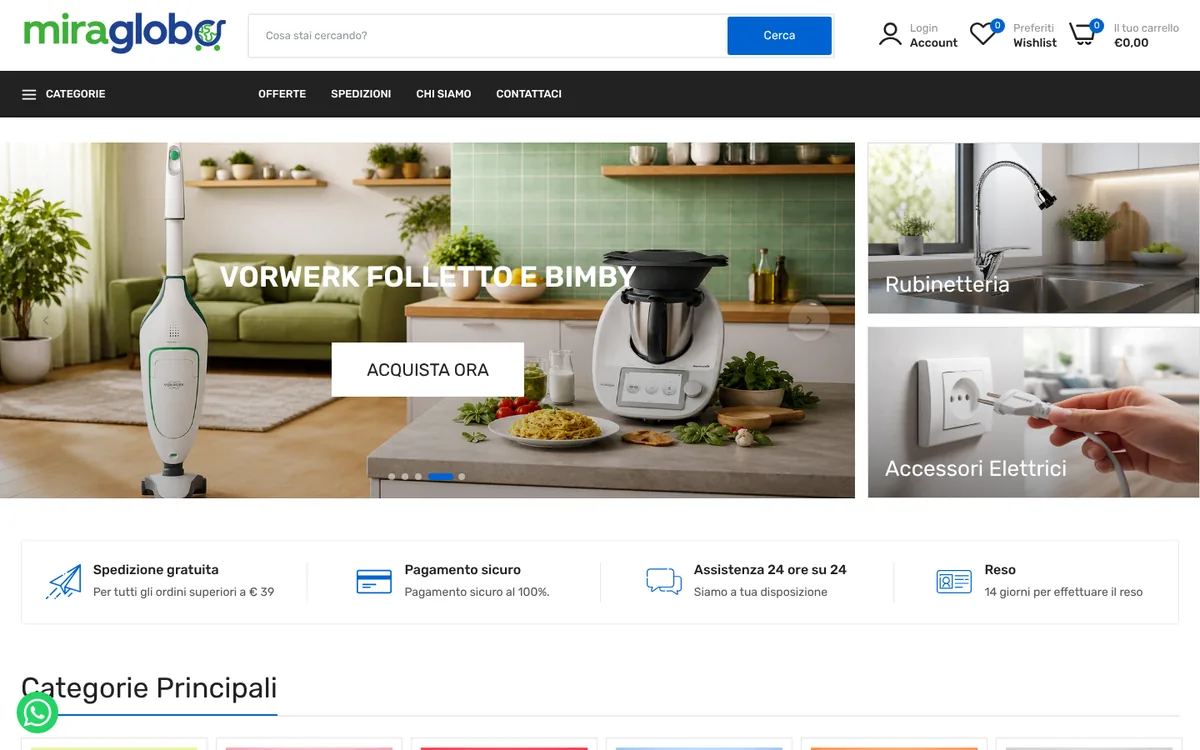
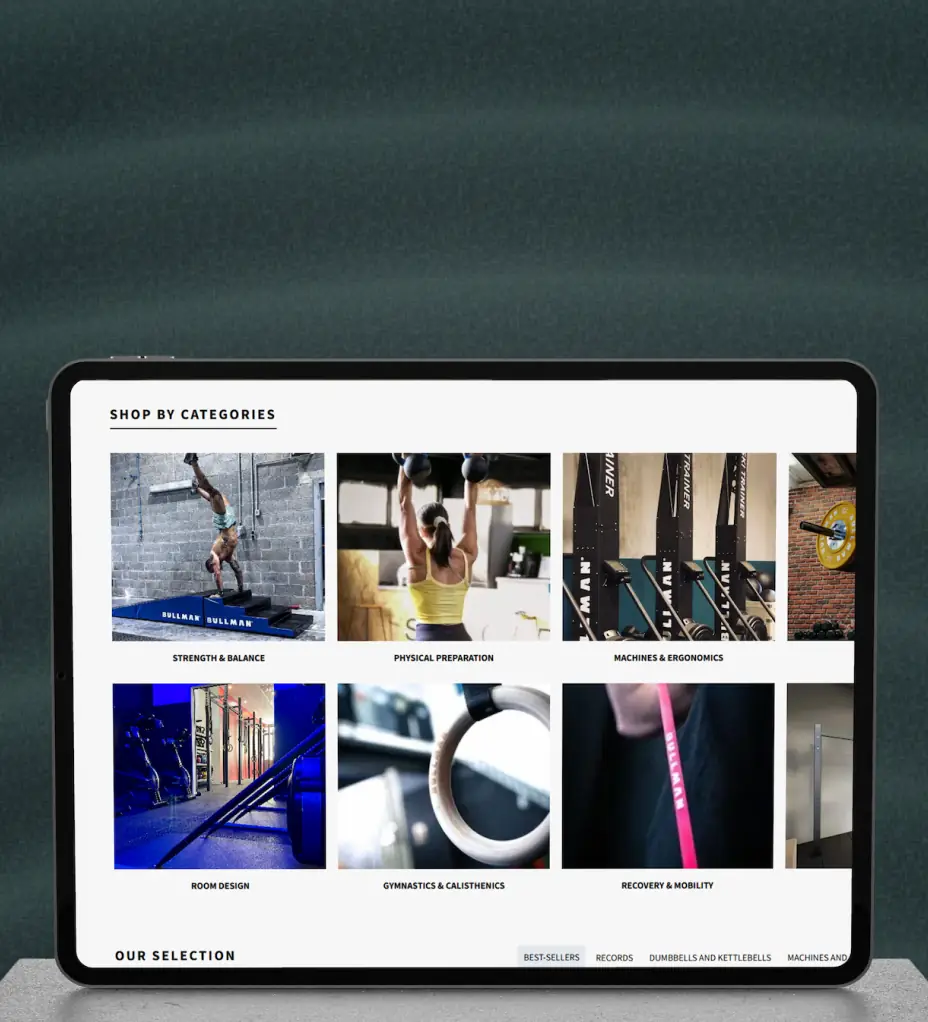
We've built on PrestaShop as well as moved stores off it. Bullman Equipment moved off PrestaShop to a headless Next.js storefront with Odoo, and the business scaled 3x after launch. Miraglobo, an Italian home and lifestyle store, moved from PrestaShop to Shopify and kept working with us on changes after launch. We know which modules hide business logic before we start mapping.
Our PrestaShop to Shopify migration framework
A structured migration process reduces disruption and leaves you with a store that is easier to scale and maintain. This framework follows our Zero Gap migration method.
Read the Zero Gap methodCapabilities we support
For growing businesses, a migration covers much more than the storefront.
- PrestaShop to Shopify Migration
- Shopify Plus Migration
- Multi-Language & Multi-Store Migration
- ERP, CRM & WMS Integration Migration
- Module-to-App Functionality Mapping
- SEO Preservation & Redirect Management
- Storefront Performance Optimization
- International Commerce Setup
Common PrestaShop migration problems businesses often miss
Ignoring module dependency mapping
Critical workflows fail after migration.
Poor data validation
Product, customer, or order inconsistencies create operational issues.
SEO structure not properly preserved
Organic visibility drops after launch.
Rebuilding existing UX problems
Migration without optimization limits long-term improvements.
No structured testing process
Checkout, integrations, or workflows break post-launch.
Lack of post-migration monitoring
Performance and operational issues go unnoticed.
PrestaShop migrations we've delivered
3x
business scale after launch
Bullman Equipment
Headless rebuild on Next.js with Odoo ERP
Read the case studyPrestaShop
to Shopify, then ongoing changes
Miraglobo
An Italian home and lifestyle store moved off PrestaShop
Read the case study
B2B
wholesale channel on Shopify Plus
Simply Nootropics
Shopify Plus B2B with account-based ordering
Read the case study
Frequently asked questions
Why migrate from PrestaShop to Shopify?
Businesses often migrate to simplify operations, improve scalability, and reduce maintenance complexity.
Can all store data be migrated?
Yes, migration generally includes products, customers, orders, categories, and related store data.
Will SEO rankings be affected?
Structured redirect mapping and SEO preservation strategies help reduce disruption to search visibility.
Can custom PrestaShop functionality be recreated on Shopify?
In many cases, yes. Functionality can often be rebuilt using Shopify apps, integrations, or custom development.
Do I need to redesign my store during migration?
Not necessarily. Existing storefront experiences can be recreated or improved depending on business goals.
How long does PrestaShop to Shopify migration take?
Timelines depend on store size, integrations, customizations, and migration complexity.
Can our PrestaShop multistore move to Shopify?
Yes. Stores that share a brand across countries usually become Shopify Markets. Separate brands become expansion stores on Shopify Plus.
How do combinations work on Shopify?
Each combination becomes a variant, with attribute groups as options. Extra product features move into metafields.
More migration guides
WooCommerce to Shopify
Move from WooCommerce to Shopify with products, orders, blog content and SEO intact.
Plan your migrationMagento to Shopify
Leave Magento upgrade cycles and hosting costs behind.
Plan your migrationBigCommerce to Shopify
BigCommerce to Shopify migration with zero downtime.
Plan your migrationThe Zero Gap method
Six stages, signed off one by one: how we move stores to Shopify with every product, customer, order, URL and integration accounted for.
See the Zero Gap method
Migrate to Shopify with a structured, scalable approach
The free Migration Readiness Assessment reviews your platform, catalog, SEO and integrations, and lists the risks before you commit to anything.
Get a free readiness assessment