
Consent-aware data engineering
First-party data, identity and privacy-aware measurement
Customer and event data moves between your storefront, analytics, ad platforms and operations tools. When those connections use different identifiers, unclear consent rules or conflicting event definitions, reports get harder to trust. We design and connect first-party data flows: the records that matter, how identities relate, permission-aware routing and documentation of where data goes.
- Shopify Customer Privacy API and Google Consent Mode v2
- Legal decisions stay with your advisers
- Building since 2010

Common symptoms
When customer data is connected, but not coordinated
Most stores have a working storefront, analytics and several marketing integrations. The trouble starts when those systems must describe the same customer journey or explain why their records differ.
These are architecture problems as much as tracking problems, so they start with a data-flow assessment rather than another pixel or dashboard. Collecting more data is not always better.
What we build
What we can engineer
A first-party data model your teams understand
We name the records that matter (customers, sessions, events, orders and selected post-purchase states) and document their source systems, definitions and quality rules, so analytics, operations and marketing work from the same written definitions.
Identity mapping without a universal identifier
A common internal customer reference makes store-side records consistent. Each destination still has its own formats, matching rules and permissions, so we map per destination where it is permitted, and never use matching to get around a consent choice.
Consent-aware collection and destination controls
We review how consent is captured and passed to supported tags and integrations: Shopify Customer Privacy API alignment, Google Consent Mode v2, destination-specific controls and tests for changed consent. The approach depends on the law that applies, your settings and your consent tool.
Governance, retention and access
For integrations in scope we document purpose, access ownership, retention, deletion dependencies and the evidence that shows each control works. Your advisers decide the obligations and lawful basis; we turn approved requirements into controls you can test.
Consent across the stack
How consent works across a Shopify measurement stack
Shopify's Customer Privacy API exposes the current permissions for purposes such as analytics, marketing and preferences. Google Consent Mode passes consent states to Google tags, including ad storage, analytics storage, ad user data and ad personalization.
They do different jobs. A Shopify consent decision does not guarantee that every custom integration behaves correctly, and Consent Mode is not a consent banner. We check where the consent state starts, how each integration receives it, and what happens when it is denied or changed.
Server-side processing is not an exemption from consent, data protection rules or destination policy.

An example
A practical view of first-party identity
Take a store whose storefront, email platform and customer service tool each keep a customer record. The team needs to know whether a return relates to an earlier order and whether a campaign brought in a genuinely new customer. That takes a consistent internal data model, carefully defined matching conditions and agreed access rules.
The result is a documented relationship between records, not a hidden profile with no limits. Where a destination has its own identifier rules or may not receive certain data, the integration respects that. Hashed email addresses can still be personal data; hashing does not remove consent or legal obligations.
India and international
Privacy rules differ by market
Indian and international stores may need different consent, disclosure, access and retention processes. In India, the Digital Personal Data Protection Act, 2023 and the DPDP Rules, 2025 set a phased framework. Stores selling internationally may also meet GDPR, ePrivacy rules and other local requirements.
We map data flows and build the agreed technical controls. Which rules apply, and whether a setup is legally sufficient, is decided with qualified counsel.
Discover
Map personal data flows
Control
Apply consent and routing rules
Demonstrate
Document tests, owners and limits
Our process
How an engagement runs
Discover the business decisions
What the data must support, and for whom.
Map sources and destinations
Including consent states and who owns each system.
Design the data model
The internal model and the mappings each destination is allowed.
Build in controlled stages
One integration at a time, with a way back.
Test every consent state
Granted, denied and changed consent, plus reconciliation with source records.
Document and hand over
Ownership, support and how future changes are controlled.
Where GTM Assistant fits
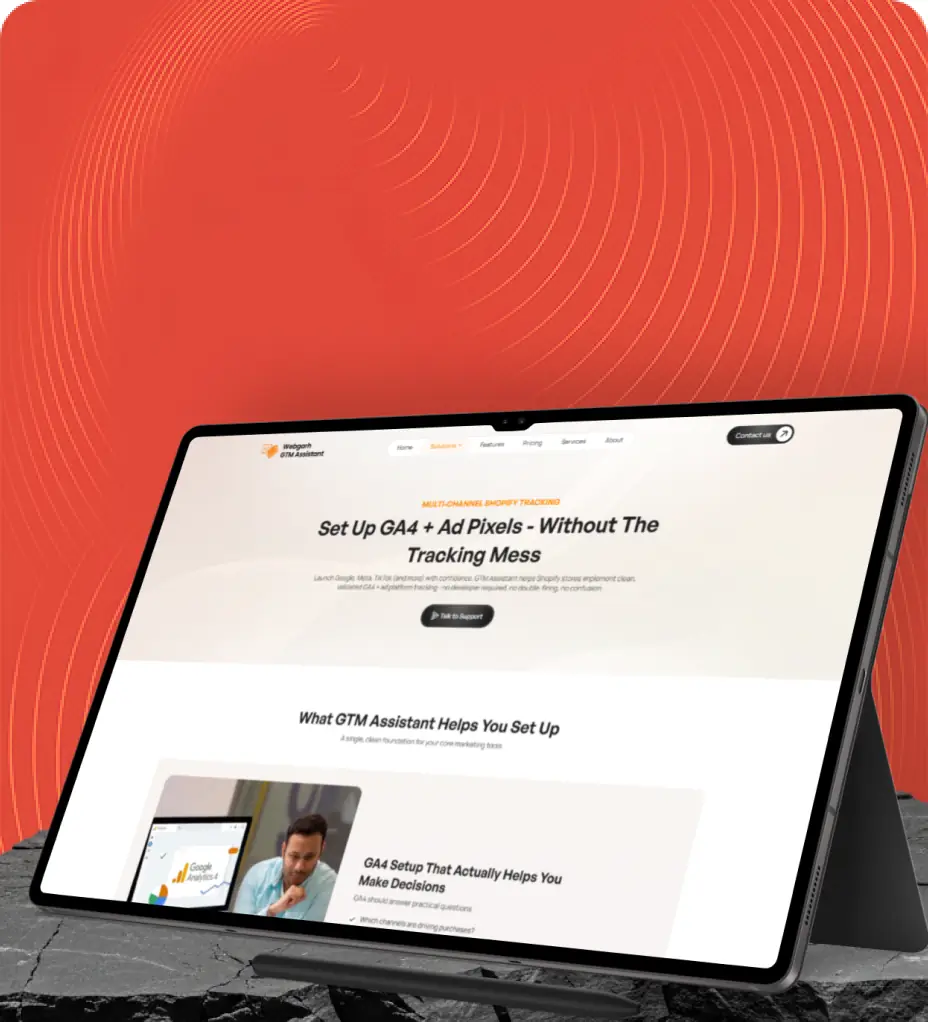
GTM Assistant is our own server-side tracking app for Shopify. This service covers wider work: custom identity mapping, events across several systems, extra governance controls and integrations with operations and internal platforms, whatever tracking app or consent tool the store uses.
Frequently asked questions
What is first-party customer data in ecommerce?
Information a store collects directly through its own customer relationships and operations, such as orders, account records and permitted on-site interactions. The label does not remove privacy requirements; purpose, collection method and later use still matter.
Does a shared identity model mean every ad platform gets the same customer identifier?
No. Consistent store-side references help reconcile events and records, but each destination has its own matching formats, permissions and policies. Data is shared only when the purpose and the rules that apply allow it.
Does Google Consent Mode v2 make a Shopify store GDPR or DPDP compliant?
No. Consent Mode changes how Google tags behave in response to consent signals. It does not collect consent for the store or decide whether the site, its data flows and its practices meet legal requirements.
Can you work with our existing consent tool and tracking setup?
Yes. An engagement can start with the tools already in place. We review compatibility, ownership and platform limits, then recommend adjusting the current setup or scoping more engineering.
What do we get from a data-flow assessment?
A source and destination map, the main data quality risks, findings on identity and consent controls, recommended priorities and a scoped engineering plan. Deliverables, access and the fee are agreed before it starts.
Connected services
The next question may sit in another system
These services often sit next to this one in a real ecommerce decision. Start with the one that usually needs clarifying next.
Shopify conversion tracking
Event measurement first.
Check event definitions, platform handoffs and measurement gaps before extending identity or privacy logic.
Explore conversion trackingAI decision intelligence
Data ready for AI.
Before asking AI to explain performance, make sure its inputs, identifiers and business rules are governed and usable.
Explore AI decision intelligence
Put the data flow on the table before adding another tool
If you work across storefront, CRM, ad and analytics systems, or are preparing for new privacy requirements, we review the current setup, find the riskiest gaps and define a practical scope.