
Launch a Shopify store that is ready for real trading from day one
A fixed-scope launch package that plans your catalog, theme, apps and tracking before anything goes live.
- Shopify Select Partner
- 80+ engineers since 2010
- 4.9 from 28 Shopify Partner Directory reviews

The Launch package
One package with a defined scope, a fixed set of deliverables and a launch date agreed before work starts.
Business and catalog planning workshop
Product, collection and metafield structure
Online Store 2.0 theme set up with reusable sections
Native-first app plan covering payments, shipping, reviews and email
GA4, Meta and Google Ads tracking with consent
Pre-launch QA, then 30 days of post-launch support, including fixes
Timeline
Most launches follow four steps: plan, build, QA, then go live and stabilize. A standard catalog and theme takes at least four weeks. Custom features, large catalogs and ERP integrations add time, and we tell you how much before you sign.

What the Launch package includes
Store settings
Payments, taxes, shipping and markets configured.
Catalog
Structured with collections, filters and metafields.
Theme
Built on Online Store 2.0 sections your team can edit.
Apps
Chosen only where Shopify can't do the job natively.
SEO basics
Clean URLs, metadata, sitemap and navigation.
Launch day
Launch-day support, then 30 days of post-launch support, including fixes.
Webgarh Shopify build framework
Most Shopify stores don't struggle because of one major mistake. They struggle because key decisions are made in isolation without considering how catalog, design, apps, data, and operations connect. Our Build Framework is designed to bring structure to those decisions.
Business & store planning
We start with how your business actually operates not just how the storefront should look. Product types, variants, and catalog complexity; target markets and customer segments; sales channels (D2C, B2B, hybrid models); operational workflows (fulfillment, returns, customer support).
Store architecture & data design
We design the underlying structure of your Shopify store so it remains manageable as your catalog and content grow. Product structure (variants, options, bundles); collections and navigation logic; metafields and metaobjects for structured, reusable content; URL structure and taxonomy; content hierarchy (product pages, collections, landing pages).
Theme setup & UX implementation
Instead of just configuring a theme, we design templates and components that support real conversion journeys. Homepage layout and key conversion paths; product and collection templates; reusable sections and modular content blocks; mobile-first design approach. Performance-conscious implementation.
App & integration planning
Many Shopify issues come from adding apps without a clear system. We take a more controlled approach. Payment methods and checkout extensions; shipping, logistics, and fulfillment tools; reviews, search, subscriptions (where relevant); CRM / ESP integrations; analytics and tracking tools.
Analytics, tracking & event setup
We set up tracking in a way that supports both marketing and decision-making from day one. Event tracking (product views, add-to-cart, checkout, purchases); platform integrations (GA4, Meta, Google Ads, etc.); basic attribution readiness; consent-aware tracking where required.
Pre-Launch QA & validation
Launch issues are often preventable with structured testing. We focus on identifying gaps early. Product and pricing validation; checkout flow testing; device and browser compatibility checks; integration validation; performance testing.
Launch & early stage stabilization
After the store goes live, we focus on stabilizing performance and resolving early-stage issues. Post-launch issue resolution; data and tracking validation; minor refinements based on real user behavior; operational adjustments as workflows settle.
We work native first. If Shopify already does something well, we use it. An app or custom code has to earn its place.
Common risks in new Shopify builds
Many Shopify stores don't fail because of the platform. They struggle because key decisions are made too quickly during the initial setup. These early choices often seem harmless at launch but create friction as the store grows.
Design-led outcomes
When a Shopify store is designed with structure and intent from the start, the experience improves across both user journeys and internal operations.
Product and catalog structure becomes easier to manage
Clear information architecture, consistent templates, and well-planned collections make navigation smoother and reduce complexity in day-to-day catalog updates.
User journeys become clearer and more predictable
Thoughtful page structure helps reduce friction across browsing, product discovery, and checkout, supporting a more consistent shopping experience.
Content and merchandising become easier to scale
Structured sections, metafields, and reusable components allow teams to update and scale content without redesigning pages.
Conversion focused layouts become easier to optimize
When templates are structured, changes can be tested and refined without disrupting the overall experience.
The store adapts better as the business grows
New products, categories, and campaigns can be introduced without breaking existing layouts or workflows.
Stores we've built

90%
less manual processing
Inkry
Integration-heavy Shopify build with automated supplier sync
Read the case study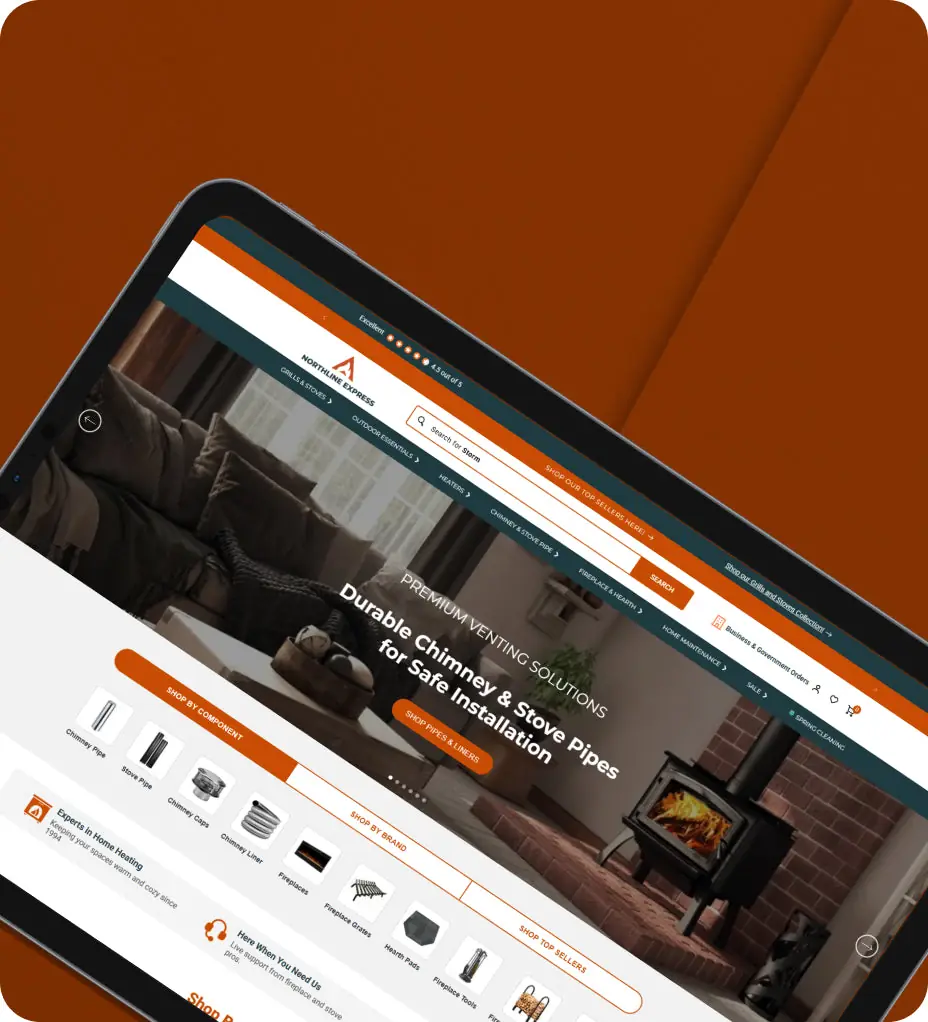
1,500+
products moved
Northline Express
A custom storefront for a technical catalog, built on Shopify Plus
Read the case study
Redesign
luxury fashion store
Gemy Maalouf
Shopify redesign refinement for a luxury fashion store
Read the case study
Frequently asked questions
Can you help if we already started building the store?
Yes. We can work with partially built stores to fix structure, improve design, optimize performance, and complete development in a structured way.
Do we need custom development for a new store?
Not always. Many stores can be built using Shopify's native features and apps, but custom development is recommended for advanced workflows, branding, or scalability needs.
Will the store be ready for SEO and marketing?
Yes. We ensure the store is structured with SEO-friendly architecture, clean URLs, optimized metadata setup, and integration-ready tracking for marketing platforms.
Can this setup support future scaling (Shopify Plus, multi-store, etc.)?
Yes. The setup is designed with scalability in mind, so it can evolve into Shopify Plus, multi-store, or international expansion without needing a complete rebuild.
How long does a new Shopify store take?
A standard catalog and theme takes at least four weeks. Custom features, large catalogs and ERP integrations add time, and we tell you how much before you sign.
What is fixed in the Launch package?
The scope, the deliverables and the launch date. We agree all three in writing before the build starts, and anything outside them is quoted separately.
Will we need lots of apps?
Usually fewer than you expect. We use Shopify's native features first and only add an app when it solves a real gap.
Can our team manage the store after launch?
Yes. The theme uses editable sections, and we hand over a walkthrough so your team can update content without a developer.
More store build services
POS & retail
Shopify Markets, expansion stores, POS and shared inventory, planned so every storefront runs on connected operations.
See multi-store systemsTheme development
Custom Shopify Online Store 2.0 themes built from reusable sections and clean code, fast on mobile and easy for your team to manage.
See how we do itRedesign
Redesign your Shopify store around how customers browse and buy.
See how we do itAll store build services
New Shopify and Shopify Plus stores, theme builds, redesigns and POS, built on Shopify's own stack so they stay fast and easy to run.
See store build services
Plan your launch with the right foundation
Tell us what you sell and when you want to open. We'll come back within 24 hours with questions and a launch plan.
Request a launch plan